Audio playback
Strategies for Safe Shared School Zones
Is this your podcast and want to remove this banner? Click here.
Chapter 1
Risks in Shared Zones Around Schools
JKP
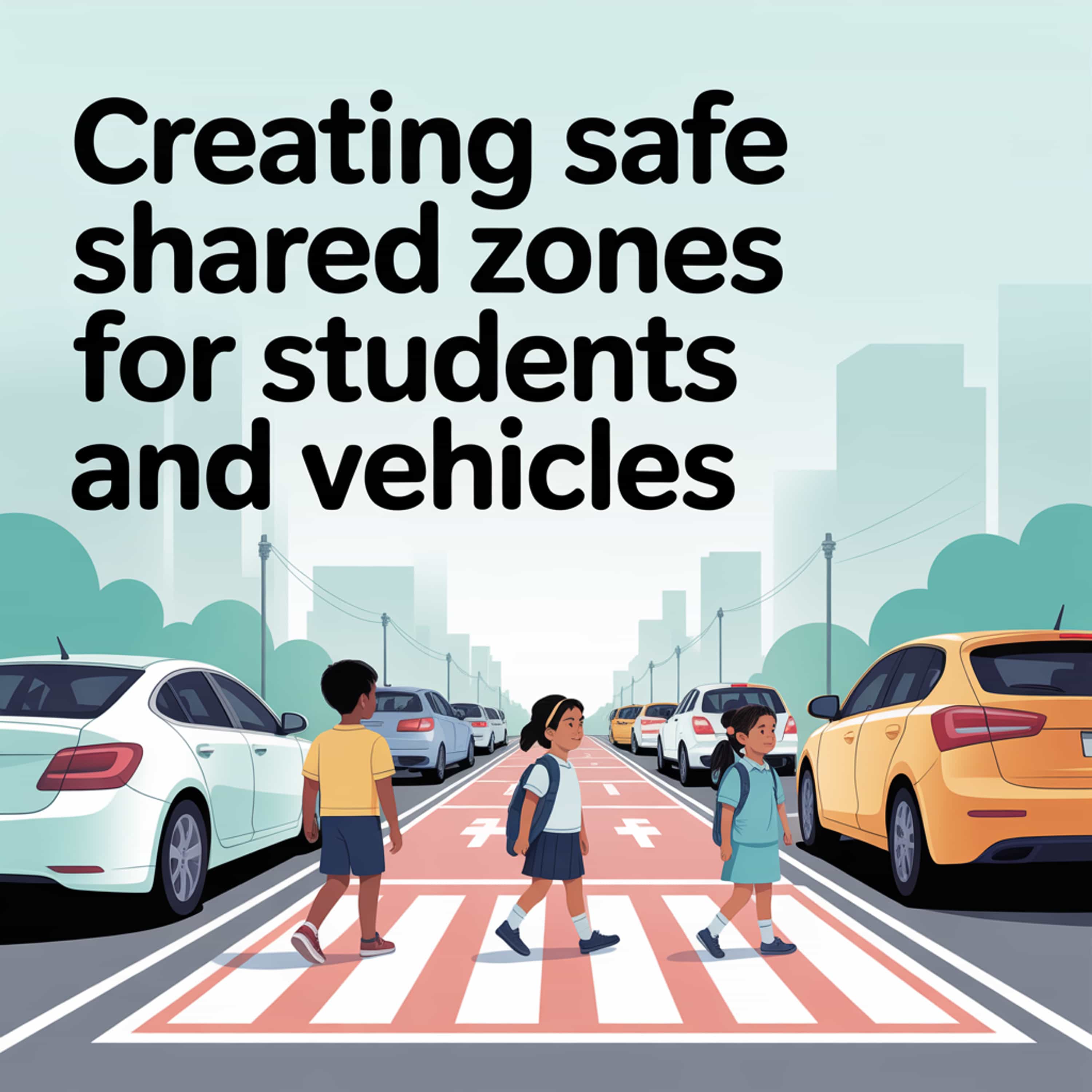
G’day everyone, Jason here from Speed Humps Australia. Thanks for tuning in to another episode where we dig into the nitty-gritty of keeping our school zones safe. Now, if you’ve ever done the school run—morning or arvo—you know it’s chaos out there. Kids darting about, cars everywhere, and honestly, it’s a miracle more accidents don’t happen. So, let’s start with what we mean by a “shared zone.” Basically, it’s any area where students and vehicles have to coexist—think drop-off points, carparks, even those little access roads around schools, childcare centres, and unis. These spots are especially risky during peak times, when you’ve got a flood of kids and cars all at once.
JKP
The main risks? Well, first up, driver inattention. There’s just so much going on—kids running, parents waving, teachers trying to keep order—that it’s easy for drivers to get distracted. Then you’ve got speeding vehicles. Even if the sign says 20 k’s an hour, there’s always someone in a rush, right? And a few k’s over can make a massive difference in reaction time. Poor visibility is another big one—big SUVs and buses can block the view, so you might not see a little one stepping out until it’s too late. Unregulated parking is a nightmare too. Without proper wheel stops or line marking, cars end up blocking walkways or creating blind spots. And finally, if there’s no physical traffic calming—like speed humps or rumble bars—there’s nothing stopping a car from flying through a pedestrian-heavy area.
JKP
Actually, this all reminds me of how I got into this business. Ages ago, my family got this invoice for a speed hump at one of our Cairns properties. At first, I thought, “Why on earth do we need that?” But then it hit me—those little humps are the only thing standing between a speeding car and a bunch of kids. That invoice was a wake-up call, and honestly, it’s what kicked off our whole journey with Speed Humps Australia. It just goes to show, sometimes it takes a surprise bill to realise how critical these safety measures are.
Chapter 2
Effective Traffic Calming Solutions
JKP
So, what actually works to make these shared zones safer? Let’s talk about the gear. First up, speed humps. They’re the classic for a reason—forcing cars to slow down to about 10 or 15 k’s an hour. It’s not just about the bump, it’s about making drivers pay attention. Our humps are built tough for Aussie conditions, and they’re a constant reminder that pedestrians come first.
JKP
Then you’ve got rumble bars and rumble strips. These are great because they give drivers a little jolt—literally. The vibration and noise as you drive over them is a wake-up call to slow down or stay in your lane. We’ve made ours modular, so they’re easy to install and can be moved around if needed. They’re especially handy near crossings or shared paths.
JKP
Wheel stops are another must-have, especially in carparks or drop-off zones. They stop cars from creeping into pedestrian areas or overhanging into walkways. Ours are made to Aussie standards, so you know they’re up to the job. And don’t forget line marking—clear arrows, walkways, and crossings guide everyone where they need to go. When you combine these with physical devices, you get a really solid safety setup.
JKP
I’ve seen firsthand how these solutions make a difference. There was this one school—can’t name names, but it’s in Queensland—where they had a heap of near misses in the pick-up zone. After we put in modular rumble bars and proper wheel stops, the number of incidents dropped off a cliff. It’s not rocket science, but it works.
Chapter 3
Design and Education for Lasting Safety
JKP
Now, here’s the thing—throwing a few speed humps down isn’t enough. You’ve gotta design the whole space with safety in mind. That means separating cars and kids wherever you can, even if it’s just with temporary barriers or bollards. Visibility is huge—make sure crossings are in well-lit, open spots, and use mirrors or extra signage at blind corners. And if you can, limit the number of entry and exit points so you’re not dealing with traffic coming from every direction.
JKP
Active supervision is another biggie. Having staff or crossing guards out there during peak times keeps everyone honest. Their presence alone can stop a lot of risky behaviour. But it’s not just about infrastructure—education is massive. Parents need regular reminders about speed limits, no-parking zones, and safe drop-off spots. And students, especially the older ones, should be taught how to use crossings properly. I’ve seen schools run safety campaigns where kids get involved, and it really helps build a culture of awareness.
JKP
Actually, we’ve done a few workshops with local councils where we bring everyone together—parents, teachers, even the kids. It’s amazing how much more compliant and safety-focused the community becomes when everyone’s on the same page. Regular communication—newsletters, signs, even a quick email blast—keeps safety top of mind. It’s not a one-and-done thing; you’ve gotta keep at it.
JKP
Alright, that’s a wrap for today. Remember, creating safe shared zones is an ongoing job, not a set-and-forget. If you’re thinking about upgrading your school’s safety setup or just want some advice, give us a shout at Speed Humps Australia. Stay safe out there, and we’ll catch you next time for more tips on keeping our communities secure.